
Soul Music and Funk would seem to hold a natural appeal for Brazilians, particularly with the strong mix of African-American culture and politics... But while several artists staked out their turf in the early '70s, soul music was slow to penetrate into the Brazilian mainstream. Many artists mixed funk with samba, while others preferred to keep the styles separate; still others delved miserably into disco and soft-pop soul. In the 1980s, new pop styles such as axe and sambalanco blurred these stylistic differences almost beyond meaning, as soul, reggae, soca and Afro-Brazilian percussion blended into one big party style. Later still, rap music came to Brazil, and now hip-hop, trip-hop and electronica are all integral parts of a funk-and-soul tinged musical landscape.
The earliest, classic Brazilian soul albums are hard to come by, particularly in the US, so this survey is fairly limited. Along with the albums I review below, I've also listed several albums that I've only heard of -- hopefully in the future I'll be able to track these discs down and can also offer my opinions about them. If you have some favorite albums or artists that you think should be added to this list, feel free to write me and suggest them as well...
Fernanda Abreu - see artist discography
 A Filial "Quem Menos Tem E Quem Mais Oferece" (Dubas, 2007)
 A Filial "$1,99" (Verge, 2008)
(Produced by Edu Lopes)
A playful, high-energy set of modern Brazilian hip-hop and baile funk, with a healthy dose of the creative, eclectic chaos of the manguebit samba-rock scene in there as well. These guys are pretty fun, and pretty cheerful and upbeat as well... They can summon up big, funky beats along with little, lo-fi larks -- if you're looking for something different and new (even by Brazilian standards) this album is definitely worth checking out.
 Johnny Alf "Nos" (EMI, 1973) (LP)
A hip and swinging album from this bossa nova old-timer! Although Alf eventually settled back into a more staid, romantic mode, this disc is steeped in 'Seventies-style funk and fusion, with some pretty wicked arrangements swirling around his understated vocals. The ensemble backing him includes heavyweights such as Gilberto Gil, Egberto Gismonti, Paulo Moura, Wagner Tiso and Arthur Verocai, who are all credited with providing orchestrations, and who presumably play on the album as well. Folks who don't dig funk-fusion might want to steer clear of this (although old-fashioned bossa vocals do assert themselves as well) but if you're looking for Johnny Alf's wild side, this is a great album to track down. Recommended.
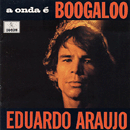 Eduardo Araujo "A Onda E Boogaloo" (Odeon, 1969) (LP)
Wow... this is pretty cool. Singer Eduardo Araujo strikes me as an artist who was kind of constantly in search of a "new sound" to latch onto. He was one of the early jovem guarda '60s teenie-bopper rockers, and got a little wiggier in the '70s... This 1969 pop-soul album is a transitional work, but one that shows he could have done quite well pursuing a career in Brazilian soul and funk... He had a much stronger sense of American-style phrasing and a stronger band than many of the self-styled "Black Rio" artists such as Cassiano and Hylton who took up the mantle in the 1970s. His secret weapon was Brazilian funk pioneer Tim Maia, who was about to bust out on his own as a solo artist on the Philips label. Maia wrote punchy new arrangements for the numerous cover tunes on here, which range from Smokey Robinson's "Same Old Song" to Arthur Conley's "Funky Street," and for whatever reason this album avoids most of the clumsiness or self-consciousness that many similar imitations of American pop frequently suffer from. Together, Araujo and Maia really "got" the magical mix of rock and soul sensibility that late '60s soul singers such as Sam & Dave or Wilson Pickett created up North. This is an unusually strong album for the style... definitely recommended!
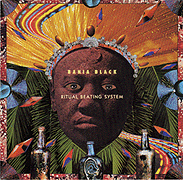 Bahia Black "Ritual Beating System" (Island/Axiom, 1992)
An ambitious and stunningly realized album, bringing together the percussive talents of the Olodum collective, Carlinhos Brown and several North American jazz and funk artists such as Herbie Hancock, Bernie Worrell, Wayne Shorter, and Henry Threadgill. This marks one of the high points of Bill Laswell's career as a multi-directional producer, creating a blend of funk, jazz, avant-jazz, art-rock and Afro-Brazilian pop that is actually more successful than most Brazilian fusion projects. Challenging, but also highly listenable.
Banda Black Rio - see artist discography
 Chico Batera "Ritmo" (Som Livre, 1979)
A manic mix of Santana-esque soul/rock/salsa and tightly crafted, Dazz Band-style funk... Drummer Chico Batera, a prolific studio session player, breaks out as a solo performer on this funky, uptempo set, which has some pretty tight grooves and is actually one of the best Brazilian funk records I've heard. Yes, in some regards it can be irritating (the shrill guitar solos, in particular) but mostly it's a booty shaker. Definitely worth checking out.
 Bat Makumba "Bat Makumba" (Bat Makumba, 2003)
A super-impressive set of Brazilian/latin dance funk tunes, written and recorded by a trio out of San Francisco, CA. Although the band is known for live shows in which they do sizzling cover versions of '60s/'70s tropicalia oldies, this album is comprised entirely of original tunes written by the band... though you'd be hard pressed to tell this apart from contemporary Brazilian manguebeat artists such as Nacao Zumbi or Lenine. The spirits of Gilberto Gil, Jorge Ben and Os Mutantes hover supportively overhead as the Bat Makumba crew work their way through a dizzying array of rhythms, moods and styles, opening with the catchy forro-funk of "Trabalha" to the calming MPB balladry of "Resolucao", soft electronica of "Cantiga" and rowdy, good-time salsa rhythms of "Quiero (Cuba Rum, Cachaca Brasil)." On "Morro De Saudade (Enredo 415)," the band collaborates with the esteemed Velha Guarda da Mangueira, a group of musicians associated with Rio's famously buoyant Mangueira samba school. All in all, this disc by Bat Makumba is quite a feat: if any band from the EU stands a chance of having their music covered by someone back in Brasil, I imagine it would be these guys! Heck, they're even named after a Gilberto Gil song... what more could you want? Highly recommended.
 Bat Makumba "Boteco" (Bat Makumba Records, 2008)
(Produced by Carl Remde & Bat Makumba)
This San Francisco-based dance band plays Brazilian music with a vengeance. The Brazilian rhythms are dense and the tempo furious -- an other tracks delve deep into American-style funk and even a bit of hippie-ish folk-jazz. Some of it's really groovy, reminding me of the wildly eclectic Brazilian manguebit of the 1990s, or the more modern hip-hop flavored "baile funk"of the last few years. Other tracks may try your patience a bit (the weirdo-funk song "Homo Sapiens," for example, is way too self-indulgent for me) but some of it's pretty cool. If you were drawn to Brazilian music for the swank harmonies and mellow elegance of classic bossa nova and MPB, this world-beat blast will be a new sound for you; depending on your temperament and taste, it may be either exasperating or exhilarating... Honestly, I found it a little exhausting. Still, I suspect they are pretty fun live.
Bebeto - see artist profile
Jorge Ben / Jorge Benjor - see artist profile
 BiD "Bambas & Biratas, v.1" (MCD/Soulcity, 2005)
Featuring a veritable who's-who of Brazilian hip-hop'n'soul, both old and new, this is a fairly sophisticated, mellow set, with a funky soul-fusion feel. Eduardo BiD is the main artist, playing host to an impressive cast of Black Rio samba-soul elders and contemporary hip-hoppers... Carlos Dafe, Seu Jorge, Marku Ribas and Elza Soares are among the big-name guests... which is kinda cool, although the now-over-the-hill Soares brings things to a painful, grinding halt when she croaks her way through an extended solo on "Mandinguera." (I know she's lauded as a living legend and all, but Ella Fitzgerald she ain't...) This isn't really my cup of tea, but it is one of the finer contemporary albums of its kind, and it thankfully forsakes the louder, more confrontational rap attacks of groups such as Afro-Reggae or the irritating techno-bleats of the "funk carioca" crowd. So, for folks looking for a low-key middle ground to help them explore the booming Brazilian hip-hop scene, this is a pretty cool record to start your explorations. Worth checking out.
Tony Bizarro - see artist profile
 Waltel Branco "Meu Balanco" (EMI, 1975/Mr. Bongo Records, 1995)
Despite the cheerleading from the acid-jazz contingent, I found little on this all-instrumental album to get excited about. The opening tracks are kind of funky, in a '70s fusion kind of way, but then it starts to dip into the softer language of Philly soul and soundtrack music. There are some OK, mellow grooves, but way too heavy on the fusion/easy listening tip, and not that vigorous overall. I mean, I'd prefer a plain old LA Express album to most of this album... and that's not necessarily meant as a compliment to Tom Scott! Still, retroholics and slee-zee listening aficionados will find a lot to get excited about here...
Carlinhos Brown - see artist profile
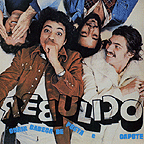 Odair Cabeca De Poeta "Rebulico " (RCA, 1979) (LP)
Lyricist Odair Tadeu de Freitas, along with his band Capote (featuring guitarist Vincente Barreto) crafted an at-times uneasy blend of rock, funk and northeastern baiao and forro. Taken from the Brazilian standpoint, as an extension of traditionally-inclined styles, this is pretty wild stuff. But viewed through the filter of North American rock and funk, it's pretty goofy-sounding and clumsy. Still, Odair was one of the most important Northeastern rockers to follow in the path laid down by Alceu Valenca, and this record actually sounds more interesting than most of the Valenca albums I've heard to date. Didn't rock my world, but it's worth checking out.
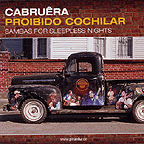 Cabruera "Proibido Cochilar: Sambas For Sleepless Nights" (Piranha Records, 2005)
A reshuffled version of their O Samba Da Minha Terra album... A dense, challenging, lively, irritating, inventive, noisy, amazing blend of regional Brazilian styles (such as forro and coco, along with creatively appropriated rock, rock-funk and tweaky acid-rock-samba... As on their earlier albums, Cabruera touch bases with contemporary manguebeat bands such as Pato Fu and Nacao Zumbi, as well as older psychedelic/samba pioneers such as Novos Baianos, who also mixed rootsy regional sounds with hard-edged "American"-style rock'n'roll... This is a little too aggressive and Red Hot Chili Peppers-ish for me, but in between the slamming testosterone injections, there's some really cool, surprisingly subtle experimental musicmaking... Definitely worth checking out!
(Banda) Capote "Banda Capote" (1996)
I'm not sure, but I think this is the same Brazilian band fronted by pop-funkster Odair Cabeca (listed above...) I haven't heard this album, and I'm not sure when it really came out... But I am quite curious.
 Antonio Carlos & Jocafi "Mudei De Ideia" (BMG-Ariola, 1971) (LP)
Way cool. This songwriting duo is not to be confused with Antonio Carlos Jobim... particularly not on this lost gem from the tail end of the tropicalia years. Full of driving, legitimately funky grooves and piercing acid-rock guitars, this is an unusually dynamic album which shows a clear debt to psychedelic singers like Gilberto Gil, but is also a notable early link in the history of Brazilian soul music. In fact, compared to the big names in Brazilian soul, softies such as Hyldon and Cassiano, this is pretty kickass material. Features the funk monster, "Kabaluere," which captures the bass-heavy electric style of the Isley Brothers, and makes it into a super-Brazilian sizzler. Very, very nice album... and one you should try to track down.
Cassiano - see artist profile
Chico Cesar - see artist profile
 Cidinho "Muito Suingue" (Phillips, 1980) (LP)
Soft-centered pop-funk, with a restrained jazz fusion influence... Not surprising since composer Sergio Paulo Valle co-wrote most of this material... The backbeats bring Tim Maia's funk to mind; the warm vocals (and shrill female chorus) conjure up Jorge Ben's work, and the rolling piano adds a whiff of glossy, lounge-y jazz, as well as a fair dose of Cuban-style salsa. It's slick, but not bad; not bad at all. Eliana Pittman guests on one track, "Amor Proibido," Luiz Vagner and Maria Vera each appear on several other songs.
Clube Do Balanco "Samba Incrementado" (Spin Music/MCD, 2004)
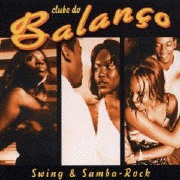 Clube Do Balanco "Swing & Samba-Rock" (Spin Music/MCD, 2005)
This one was recommended to me by a reader... and it's pretty cool! This Sao Paulo-based ensemble pays homage to the smooth Brazilian soul-samba sound of the 1970s, picking up where artists such as Jorge Ben, Banda Black Rio and Tim Maia left off. And they get the style completely right: this is smooth, mellow party music, perfect for a relaxing evening on a steamy, summery dance floor. The grooves are sweet, the rhythm is gentle but persistent, and the vibe is just right. Plus, they are amazingly well-connected: guest performers include Brazilian pop and funk icons such as samba-funkster Bebetos and Marku Ribas, jovem guarda legend Erasmo Carlos, Seu Jorge and a host of younger soul-funk-triphoppers like Max De Castro, Paula Lima and Wilson Simoninha, each seamlessly mixed into the band's gentle party vibe. If this sounds like it's up your alley, trust your instincts: it's really quite good!
Gerson King Combo - see artist profile
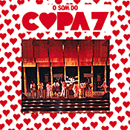
 Copa 7 "O Som Do Copa 7" (Top Tape, 1979) (LP)
One of the sleeker bands from the Black Rio soul movement, Copa 7 were looser than the better-known Banda Black Rio and funkier than most of the soul singers that dominated the '70s scene. They were also more identifiably building from a samba background, but layering it with tight horn and keyboard arrangements, similar to Earth Wind and Fire. The Copa 7 took their name from an earlier jazz band led by J.T. Meirelles, although as far as I know there were no direct links between the two groups. Either way, this is a pretty cool record, with some solid funk and soul performances, and a few lapses into softer disco-pop instrumentals. The influences of bands such as the Bar Kays, KC & The Sunshine Band and Brazil's Tim Maia can readily be heard on this disc, a long-time collector's item, and certainly worth looking for, if you're into the style.
 Copa 7 "O Som Do Copa 7, v.2" (Top Tape, 1980) (LP)
A fine follow-up to their first album, maybe a bit tougher and more muscular, but still drenched in solid, funky rhythms and sharp, American-style funk and R&B. These guys really were several steps ahead of most of their competition. [Reissued by What Music.] Recommended!
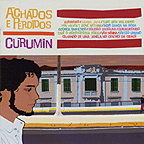 Curumin "Achados E Perdidos" (Quannum Records, 2005)
This disc opens with "Guerreiro," a thunderously sexy, slinky, cool, irresistibly catchy pop-funk samba that recalls Stevie Wonder's grooviest work from the early 1970s... That sweet funk vibe is echoed on "Tudo Bem Malandro," which also uses a full, fat-toned keyboards to create a thumping funk beat -- Curumin's debt to Wonder is made explicit in his English-language cover of Wonder's "You Haven't Done Nothing," which rounds out the album's soft, sensual opening set. From there, more contemporary hip-hop and Brazilian pop influences kick in, and the record starts to lose some of its momentum, becoming more a collection of songs than a cohesive artistic statement. There's a little bit of a patchwork, kitchen-sink feel to the second half of the album, but this lack of cohesion also indicate's Curumin's searching, innovative creativity. A Sao Paulo native (whose given name is Luciano Nakata Albuquerque), Curumin makes a point of opening his album up to guest performances by off-the-radar locals; as is often the case, Sao Paulo's music scene offers a grittier, edgier alternative to the sleek elegance of Rio and the party-down sambas of Bahia... Of the many Brazilian artists who have melded funk, soul and samba over the last four decades, Curumin stands as one of the most fluid and accomplished. Sadly, the entire album isn't as funky as the opening numbers, but those few tracks go a long way towards establishing him as a contemporary pop artist worth keeping track of... While savoring the songs on here that get my toes tapping, I'm definitely looking forward to Curumin's next record!
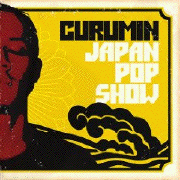 Curumin "JapanPopShow" (Quannum Records, 2008)
(Produced by Curumin, Gustavo Lenza & Lucas Martins)
Brazilian music has always been about the mixing of cultures and styles, and Luciano Nakata Albuquerque, aka Curumin, is a young Brazilian of mixed Spanish-Japanese ancestry who exemplifies this tradition of diversity. As on his previous album, Curumin shows mastery of a wide variety of styles, mainly from the continuum of soul, funk and hip-hop, but with distinct touches of Brazilian samba-pop and different stripes of rock in the mix as well. JapanPopShow is far more cohesive and consistent album than 2005's Achados E Perdidos, moving from one pop style and era to another while keeping an even keel -- the songs all sound different, but they are all good within the separate sounds. For old-schoolers (like me) the album's gem is the song "Compacto," an irresistible samba-funk tune on a par with Jorge Ben's great works of the 1970s, a hummable and seductive ultimate cruising tune. Other standout tracks include "Caixa Preta," which opens with rock guitars and settles into a slippery, funky vibe, and the dubby, trip-hoppy "Dancando No Escuro." The album encompasses various styles of funk, soul and hip-hop, edging into the more hyperactive modern-day "baile funk" scene, but staying thankfully closer to the sultry grooves of yesteryear. Guests include fellow Brazilian pop experimentalist Lucas Santtana, samba-funk elder Marku Ribas and the American hip-hop duo Blackalicious, who join Bay Area rapper Lateef the Truthspeaker on the song "Kyoto." Curumin's savvy mix of styles is another strong example of how the youthful, ever-modern Sao Paulo scene is setting itself on a par with other major pop movements, absorbing influences and creating new sounds that will inspire similar creative bursts across the globe. Definitely worth checking out!
 Curumin "Arrocha!" (Six Degrees Records, 2012)
Carlos Dafe - see artist profile
 D'Angelo "D'Angelo" (Equipe, 1970) (LP)
Sort of a samba-rock touchstone, this was the lone album released by organist D'Angelo, who certainly had a funkier feel than, say, Walter Wanderley or many other Brazilian keyboardists. Nonetheless, this is still a pretty easy-oriented, lounge-y set, with a few uptempo, soul-oriented tracks and a lot of softer stuff as well. I'm curious about how tapped into the "Black Rio" soul scene this guy was: he covers several Tim Maia songs and a couple by Cassiano -- was he in somebody's band or something? I'm also curious about who was backing him here: the drumming in particular seems pretty sharp. This record was re-released by WhatMusic in the 2000's, and apparently D'Angelo was pretty down-and-out when the label got in touch to give him his royalties. But, decades later, here is his legacy!
 Daude "Daude" (Tinder/Natasha Records, 1996)
Poppy soul music from Bahia, featuring smoothed-out, funky-drummered versions of songs by Carlinhos Brown, Caetano Veloso, and Jorge Ben. Gilberto Gil's guitarist, Celso Fonseca, plays throughout and provides several songs. When I first heard this album, I thought it was really cool hearing a Soul II Soul style mix em portuguese... But revisiting this album, I find it hasn't held up that well; now it sounds jittery and a little forced. One of the more compelling moments is her version of "Objeto Nao Identificao", a tropicalia era favorite of Gal Costa's.
Daude "Daude II" (Natasha Records, 1997)
 Daude "Neguinha Te Amo" (RealWorld Records, 2003)
A disappointing follow-up to her slinky debut... Daude's funky side is engulfed by a light, frothy, slightly dancey pop sensibility. It's a pretty lightweight mix of hiphop-tronica and Brazilian-style pop, easy on the ears and full of positive lyrics about being black, female and Brazilian... But there's a treble-heavy perkiness that can be a bit grating. That being said, by the end of the album I was mostly on board with what she was doing. It's worth checking out, though you might also find it a bit too prefab.
Daude "Simbora" (Natasha, 1999)
 Max De Castro "Samba Raro" (Trama Records, 2000)
The debut album by Max De Castro, son of samba-soul pioneer Wilson Simonal, and brother to Trama labelmate Simoninha... Haven't heard this one yet, but I'm definitely curious. I'll keep you posted.
 Max De Castro "Orquestra Klaxon" (Trama Records, 2002)
A canny, soulful, impressive mix of styles... Rio hipster Max De Castro sails through hip-hop, jazz, modernized samba, soft-soul and clubby electronica, all with equal ease. The disc is paced like a fine, mellow set by a knowledgable club DJ, but it's from real performances that call on the talents of numerous luminaries in a variety of Brazilian styles. For example, on the jazz cut, "O Nego Do Cabelo Bom," he jams with old-school Braz-jazzers Wilson Das Neves and J.T. Mierelles; other guests include singers Paula Lima and Patricia Marx, as well as co-songwriters Nelson Motta and Seu Jorge. De Castro lays claim to Brazil's pop-rock past, calling his music "jovem vanguarda," and backs it up with contributions from teen-scene old-timers Erasmo Carlos and ex-Mutante Liminha. It's a pretty impressive lineup, not to mention the horde of younger, fresh-faced players that form the core of his band, notably percussionist Fred Prince... Much of this album intersects styles that I don't like -- particularly modern R&B and club music -- but nonetheless I found it consistently fresh and engaging. Definitely worth checking out!
Max De Castro "Max De Castro" (Trama Records, 2005)
Max De Castro "Balanco Das Horas" (Trama Records, 2006)
 Miguel De Deus "Black Soul Brothers" (CopacabanaRecords, 1977) (LP)
Funky music, terrible singer. I mean, like, the backing band is in a really deep groove, but De Deus sounds really, really annoying -- terrible tone, grating personality, and totally erratic. I bet it was a lot of fun seeing him live -- it's a very high-energy performance -- but on wax, it's too manic and un-melodic for me, even worse than Tim Maia or most of the other Brazilian soul singers. Apparently this was the only album of his career, yet while I have to say I find his singing to be irritating, the record itself is definitely a historical gem... If you're seriously checking out classic Brazilian funk, this is a record you'll want to track down... even with the dubious vocals.
Sandra De Sa - see artist profile
 Raul De Souza (Raulzinho & Impacto 8) "International Hot" (Equipe, 1968) (LP)
A pretty funky set from an American-style party band whose sound never quite clicked with Brazilian music fans... Trombonist Raul De Souza led this soul-oriented octet, which also featured drummer Robertinho Da Silva, organ player Helio Celso and saxophonist Oberdan Magalhaes (later of Banda Black Rio). The "Black Rio" soul sound hadn't really hit Brazil yet, so these guys were kind of shooting in the dark... But it's a fun set, a mix of earnest funk and deliberate kitsch... They covered hits like "Spinning Wheel" and "You've Made Me So Very Happy," alongside giddy instrumentals with titles like "Fried Bananas" and "Canteloupe Island." It's goofy, but better than I had expected... Worth checking out.
 Os Diagonais "Os Diagonais" (CBS-Epic Records, 1969) (LP)
A fun set of Brazilian pop-soul, with a youthful, cheerful vibe. This Rio-based band featured several key players in the burgeoning "Black Rio" soul scene, notably singer-guitarist Hyldon Souza and singer-songwriter Cassiano. In the late '60s, they backed Tim Maia, who was perhaps the most influential of the Brazilian soul singers. This was the band's first full-length album, recorded after they had been together several years and recorded a few singles, and has kind of an Arthur Conley-ish feel... Not quite all-out funky, but close. Personally I find this a lot more enjoyable than their later work in the 1970s (particularly Cassiano's) where the music got pretty overbaked. Here, it's still all fresh and earnest, and not too serious or syrupy. Definitely worth checking out.
 Os Diagonais "Os Diagonais (Cada Um Na Sua)" (RCA, 1971) (LP)
This was the second and last album by Os Diagonais... Several of the songs on this disc were written by Cassiano, whose own solo career stretched through the 1970s... The album opens with some overly-bright, perky sunshine-pop, straight out of the Southern California/LA playbook; Philly-style soul and a bit of harder funk come into play later. I can't say I actually liked this record that much -- most of the songs seem a bit shrill and hyperactive -- but serious students of Brazilian funk and soul will definitely want to check it out.
 Di Melo "Di Melo" (Odeon, 1975) (LP)
This mid-'70s groover has ties to the nascent soul & funk scene, but even more in common with the exploratory acoustic fusion of Gilberto Gil around the same time. A missing gem from MPB's post-tropicalia golden age... Definitely worth tracking down!
 Branca Di Neve "Branca Mete Bronca!" (Continental Records, 1987)
I was drawn to this disc because I notice it had several songs from some notably funky Brazilian soul/pop artists such as Jorge Ben, Marku Ribas and Itamar Assumpcao... But this is a pretty soft-centered pop album, with not a lot of bite to it... Nothing much to get excited about, really.
 Branca Di Neve "Branca Mete Bonca, v.2" (Continental Records, 1988)
Bleah. There's just no energy to his vocals, and lots of weak, tepid pop arrangements. What's the deal with this guy? Why did they record him? And why did they reissue his records on CD? I don't get it.
 Paulo Diniz "Brasil, Brasa, Braseiro" (Beverly/Copacabana Records, 1968) (LP)
The debut LP from songwriter/actor/drummer Paulo Diniz, who had recorded his first singles a couple of years earlier. This is funky, soulful pop, loosely in the jovem guarda style, but with a hard edge and a measure of grit that isn't often heard within the teenybopper JG canon... Some of this is relatively slight material, but there is an underlying solidity to this album that belies the conventional, romantic pop songs and undisciplined soul wailing that Diniz tilted towards. Indeed, compared to better-known Brazilian soul singers such as Tim Maia and Cassiano, Diniz is a much more skillful and varied performer. This disc only hints at the depth he had in him (check out his next record, Quero Voltar Pra Bahia...) but it's still a cut or two above many Brazilian pop-rock albums of the era. Worth checking out.
 Paulo Diniz "Quero Voltar Pra Bahia" (EMI-Odeon, 1969) (LP)
Wow. Who knew? This is a surprisingly, thrillingly funky album, with an unusually accomplished psychedelic sound... quite a leap from his demure jovem guarda origins! Even on the slightest, poppiest tunes, Diniz has a fat, full sound backing him up, a rich funk-rock mix that recalls the best early work by Jorge Ben and Gilberto Gil. The title track is a pretty dumb, fluffy tune, sung in English, and has been covered by several artists over the years; this version is the original, sung by the composer. But the real eye openers on this album are his cover of Lupicino Rodrigues' old samba, "Felicidade," sung here as sort of an acid-soul roda de samba, with an out-of-control female chorus and a heavy, heavy backbeat underneath the vocal refrain. This is followed by a sizzling funk number, "Marginal III," with slinky guitar riffs worthy of Ben's best work. Diniz's vocals have their ups and downs -- I'm not fond of the uncontrolled, growling "soul" school of Tim Maia and Eduardo Arajao, which is where Diniz seems to have thrown his hat, but for the most part he sounds fine, coasting atop some of the best, fullest acid-pop arrangements I've heard on a Brazilian record of this era. This is a hidden nugget... Definitely recommended!
Benito Di Paula - see artist discography
Joao Donato - see artist discography
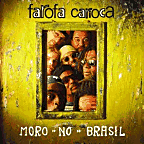 Farofa Carioca "Moro No Brasil" (Universal, 1998)
(Produced by Farofa Carioca & Carlos Beni)
This contemporary samba-soul band is most notable for the presence of future solo star Seu Jorge... Much less so for the music itself, which is a generic, hyperactive update of the Brazilian funk sounds of yesteryear -- it lacks any semblance of subtlety or grace, and reminds me of Earth Wind & Fire or Ed Motta, more than P-Funk or Bootsy. It's the manic pace that really turns me off, as well as the wall-of-sound production style, which has a forced, artificial feel to it, and seems rushed and not very heartfelt. Seu Jorge knew what he was doing when he shifted gears and got out of this band. They kinda sucked.
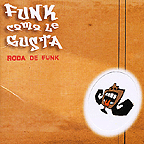 Funk Como Le Gusta "Roda De Funk" (ST2, 2000)
Fans of Venezuela's Los Amigos Invisibles may find kindred spirits in this Sao Paulo-based funk outfit... Funk Como Le Gusta specializes in horn-heavy groove tunes that are reminiscent of War and Tower of Power back in the day... There are also homegrown touches as on the Tim Maia-styled soul crooning of "Olhos Coloridos" and the cumbia flavored "Funk De Bamba," as well as a dash of ska and axe flavoring. A little smooth for my tastes, but worth checking out. Soul and funk fans will probably love this!
Funk Como Le Gusta "FCLG" (ST2, 2005)
Funk Como Le Gusta "Remixes" (ST2, 2005)
With DJ Patife, DL Cuca and Cosmonautics.
Funk Como Le Gusta "Special Edition (Box Set)" (ST2, 2005)
A box set with three albums: Roda De Funk, FCLG and Funk Como Le Gusta Remix.
Funk Como Le Gusta "Ao Vivo" (DVD) (ST2, 2007)
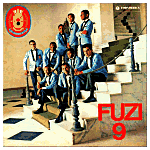 Fuzi 9 "Fuzi 9" (Todamerica, 1970) (LP)
Authentic, though semi-inept pop-funk, replete with slight psychedelic tinges, and apparently recorded by a bunch of guys who were enlisted in the army at the time... Although I'm sure this qualifies as a genuine "samba soul" lost nugget, you have to admit that the rhythm section is kinda wobbly, the horns are off-key, and the organ soloist is a little ragged, as are the group vocals. But once you get past all that, this album does have its charms. Mostly, I think, this is notable for the presence of band member Carlos Dafe, who went on to record several soul albums in the '70s and '80s. Not sure what he was up to between this group and his solo stuff...
Gabriel O Pensador - see artist profile
Gilberto Gil - see artist discography
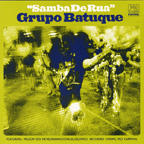 Grupo Batuque "Samba De Rua" (FarOut Records, 1997)
A funk- and rock-flavored percussion album recorded (in the studio) during Rio's 1997 Carnaval. Features the eminent Wilson Das Neves and a slew of younger players. I thought most of these tracks were pretty boring; many are monotonous riffs on one swinging beat or another, it's all very well and fine, but overall it's amazingly static. I suspect this album was made with club DJs in mind, folks looking for beats to sample, rather than for the casual listener... There is one song at the end ("Aoyama Sam") which features a full parade ensemble, along with cuica, surdo, and (thank god!) a vocal chorus... But mostly this album is really sparse and un-melodic. Not my cup of tea, but if you're into percussion, this album might be a real turn-on.
Grupo Batuque "Samba De Futebol" (FarOut Records, 1998)
Grupo Batuque "Africa Brazil" (FarOut Records, 2000)
Grupo Batuque/Various Artists "O Tempo Do Samba" (FarOut Records, 2005)
Remixes galore!
Grupo Batuque "O Tempo Do Samba" (FarOut Records, 2005)
Grupo Batuque "Ole Ola - Futebol Bonito" (FarOut Records, 2006)
Grupo Batuque "Batucada Maneira" (FarOut Records, 2006)
A four-song EP, including two remixes of the title track, "Batucada Maneira."
Bebel Gilberto - see artist discography
Hyldon - see artist profile
 Instituto "Colecao Nacional" (YBrasil Records, 2002)
(Produced by Rica Amabis & Instituto)
A mellow, downtempo mix of electronica, rap and dub from a loose musical confederation led by Rica Amabis, with contributions by a horde of Brazilian hipsters, including Otto, Fred Zero Quatro and a slew of other, less well-known artists. The jungle/house beats don't do much for me, but I'm a grouchy old man. Worth checking out if you're in search of modern Brazilian stuff that's off the beaten track, pretty dynamic and stylistically diverse, even if it ain't quite my cup of tea.
Lady Zu "A Noite Vai Chegar" (Philips, 1977) (LP)
Lady Zu "Femea Brasileira" (Philips, 1979) (LP)
Lady Zu "Number One" (Abril Records, 2002)
Leleo "Se Quiser Tem" (Dubas Records, 2008)
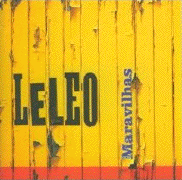 Leleo "Maravilhas" (Acid Jazz Records, 2008)
(Produced by Leleo & Lucas Marcier)
Perfect summertime tunes from this Brazilian guitarist-producer. The first song I heard off here, "Ferias," is a real doozy, a sly, sexy samba-pop song which mixes the funky tropical vibe of Jorge Ben's best early-1970s work with a great approximation of the classic roots reggae of the Bob Marley era -- heavy syncopation, doubled guitar lines, and plenty of soul. It's a celebration of summertime and idleness, freedom and relaxation, with Leleo's nasality exaggerated by vocal processing -- a heady brew of unusual sounds, all coalescing into an irresistible, perfect Brazilian pop tune. I rushed to get the CD after seeing the "Ferias" video, and am pretty pleased with the rest of the record. About half the album is too clubby for me, but the songs I like are pretty groovy, reminiscent of the best of the '70s samba-funk scene. Definitely worth checking out.
Paula Lima "Diva Paulista" (Mr. Bongo Records, 2002)
Paula Lima "Paula Lima" (Universal, 2003)
Paula Lima "E Isso Ai!" (Universal, 2005)
Paula Lima "Sinceramente" (Indie Records, 2006)
Arto Lindsay - see artist discography
Marcio & Goro "Atrevida" (1997)
Marcio & Goro "Ponto G" (1998)
Marcio & Goro "Festa Surpresa" (Abril Records, 1999)
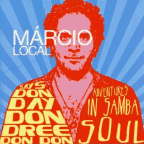 Marcio Local "Says Don Day Don Dree Don Don: Adventures In Samba Soul" (Luaka Bop Records, 2009)
(Produced by Mario Caldato, Jr.)
Contemporary Brazilian funk and soul, from a Rio native who carries the torch of samba-soul pioneers such as Tim Maia and Wilson Simonal... There's a touch of the cooler, funkier, sexier Jorge Ben in there as well, but mostly that sound is in the mix; there are some great arrangements (courtesy of Beastie Boy producer Mario C, who in recent years has returned to Brazil and joined the simmering local hip-hop/samba scenes...) but the vocals are pure Simonal, a husky, schmaltzy style that is popular in Brazil, but may be hard for many North Americans to get into. This is a musically creative record, and in terms of keeping true to the traditions of 1970s/80s Brazil soul, it's also very authentic. Definitely worth checking out -- if you like this, you'll also want to check out Maia, Simonal and Maia's nephew, Ed Motta.
Marcio Local "Samba Sem Nenhum Problema" (Universal, 2009)
Tim Maia - see artist discography
Marku (Ribas) - see artist discography
Patricia Marx - see artist discography
 Rose Max "Atlantico" (Cinq Etoiles, 2003)
An adequate singer amid slick, somewhat generic slick-soul MPB arrangements. Didn't do much for me, but might be fun for folks who like singers such as Patricia Marx or Luciano Mello.
 MC Buchecha "MC Buchecha" (Universal-Mercury, 2003)
Super-perky, lightweight pop, with a token veneer of hip-hoppish production. Not much to write home about, really.
Luciana Mello - see artist discography
Luiz Melodia - see artist discography
 Dom Mita "O Som Do Black Rio" (Transmita/Whatmusic, 2001)

A Black Rio revivalist album, this features soul singer and percussionist Dom Mita along with a slew of his old pals, including members of Banda Black Rio and vocalist Carlos Dafe (who guests on one song). The album is dedicated to the late Brazilian funk pioneer Tim Maia, and is definitely true to his spirit. There's an odd, familiar mix of disco-ish production and legitimately funky rhythms -- this modern disc is well-produced and tightly arranged. It might not be your bag, but if it is, I'm sure you'll be pretty happy with it.
Ed Motta - see artist discography
Nacao Zumbi - see artist discography
 Quinteto Ternura "Quinteto Ternura" (RCA, 1974) (LP)
The vitality these ex-Jovem Guarda teens showed earlier in their career (as Trio Ternura) is sadly absent on this, their final album. Despite the Jackson Five-style outfits worn on the cover, this is calculatedly light, perky, breezy pop, following in the path of bands such as The Association or Terry Jacks, rather than the soul or psychedelic music they dabbled in earlier. The most striking track is the Joni Mitchell-styled "Consegui Concluir"; they also cover Caetano Veloso's "Baby," but in as bland a fashion as possible. Disappointing. (See Trio Ternura, below.)
Marku Ribas - see artist discography
Dom Salvador - See artist discography
Emilio Santiago - See artist discography
Lucas Santtana - see artist discography
Seu Jorge - see artist discography
 Orlando Silveira & SOS "Band It" (Parlophone Records, 1974) (LP)
A kitschy disco-era novelty album, with instrumental numbers that range from jittery disco-funk to over-the-top cheesy-orchestral, along with some English-language vocal tunes. It's all very sound-library-ish and ripe for adulation by irony-addicted retro-ologists. Sorry, folks -- I just can't take music like this seriously, or spend the time to enjoy it as a joke. Apparently Orlando Silveira was a popular bandleader with a long career that stretched back into more traditional, substantive work than this... But his SOS ("Som Orlando Silveira") is really just a joke band, and can be treated as such.
 The Silvery Boys "De Com Forca... Pra Frente" (RGE, 1967) (LP)
I first saw this band listed as part of a series of cheapo "samba-rock" collections -- a style that I like, but those particular comps were so cheesy-looking I just couldn't bring myself to pick them up. So I can't tell you (yet) it the Silvery Boys' samba-rock bona fides are based on these 'Sixties tracks, or on later, funkier stuff. Regardless, these guys had dynamism and a solid groove... You can certainly hear the seeds of any future funkiness in these frat-rockish Summer of Love recordings, which rely on a bouncy backbeat and lots of horn riffs and organ fills. For the Brazilian jovem guarda scene, this was pretty tight, although admittedly still a little goofy. Definitely worth a spin.
The Silvery Boys "The Silvery Boys" (RGE, 1968)
Silvinha - see artist discography
Wilson Simonal -- see artist profile
Wilson Simoninha "Volume 2" (Trama Records, 2000)
 Wilson Simoninha "Sambaland Club" (Trama Records, 2002)
One of Wilson Simonal's two music-making sons (the other being Max De Castro), Simoninha travels the same roads as his dad, with a diverse mix of danceable soul, disco-y cabaret funk, slower pop tunes and the like. It's a lot like a Portuguese-language of Earth Wind & Fire... Simoninha has a nice voice (reminiscent of his dad, but with more fluid phrasing) but the music doesn't do much for me. Folks who are more into mainstream, modern R&B and soul might like this, though -- it's certainly worth checking out if you are on the clubby tip. Highights include a moody cover of his father's song, "Tributo A Martin Luther King" and a ten-minute long spoken word interview with Miele, about the good old days in the Brazilian nightclub scene. Seu Jorge guests on the bouncy, horn-based opening track, "Seja Bem Vindo."
 Wilson Simoninha "Introducing Wilson Simoninha: Live Session At Trama Studios" (Trama Records, 2003)
A retrospective set that includes re-recordings of work from various albums, and some new material as well. Guest artist Cesar Camargo Mariano plays keyboards on an amped-up version of "Tributo A Martin Luther King" and Simoninha's band, S de Samba, chugs away on a lively set of funk-soul-samba tunes. Simoninha's fusion side comes out a bit more here, as well as a slinky debt to Jorge Ben Jor, and a hint of Joao Bosco, in his mellower moments. Still not anything I'd want to listen to for fun, but I can see where others might really dig it.
Wilson Simoninha "Melhor" (2008)
Elza Soares - see artist discography
 Som Nosso De Cada Dia "SNEGS" (Continental Records, 1974) (LP)
(Produced by Julio Nagib & Peninha Schmidt)
The debut album by one of the best Brazilian rock (and funk) bands of the 1970s... Legendary and -- naturally -- out of print for years. Part of the band came from the remnants of the popular psychedelic/jovem guarda group, Os Incriveis... This is the only album with the band's co-founder, keyboardist/multi-instrumentalist Manito, of Os Incriveis... Haven't heard it yet, but I'm looking forward to the day when it gets reissued, so I can check it out...
 Som Nosso De Cada Dia "A Procura Da Essencia: Ao Vivo 1975-1976" (Editio Princeps, 2004)
(Produced by Marcelo Spindola Bacha)
A 2-CD set of live recordings by Som Nosso De Cada Dia, one of the best and most forceful Brazilian prog-rock bands. Moogs and guitars aplenty ride atop a driving, at times brutal, beat... While contemporaries such as Os Mutantes and O Terco slid into a more pop-oriented sound, Som Nosso were far more hard-edged, keeping pace with genre founders such as Return To Forever and Chick Corea, although with an experimental bent that also suggests the work of Can and the krautrock scene, as well as some boogie rock and old-school, Sabbath-y heavy metal. This challenging collection, culled from archival tapes kept by guitarist Egidio Conde, is packed with leviathan jams, ten minutes or longer and a rough-and-rugged feel that's really quite different that practically anything else coming out of Brazil at the time. Not what I'd put on for casual listening, but of immense historical value.
 Som Nosso De Cada Dia "Som Nosso" (Columbia Records, 1977) (LP)
(Produced by Tony Bizarro)
One of the best, most challenging, most satisfying of the classic Brazilian soul/funk albums... But that's only half the story! Apparently this album is a patchwork effort, made up of an earlier album (Amazonia) that was shelved by their old label, and new material (the funk stuff) that CBS thought would be more salable... After laying down some groovy, innovative, multi-textured funk, the Som Nosso band shift gears on the second side of the album and get into some spacey, noodly, occasionally shrill prog-rock... Like their funk music, though, the prog material is rather accomplished, and stands up quite well next to the krautrock or what-have-you that was going on elsewhere at the time. Only one track is outright irritating: "Agua Limpa" gets a little longwinded and facile, sounding less like Can and more like Yes or Emerson, Lake & Palmer... Otherwise, this disc is a real find for '70s-aholic music geeks. Definitely worth tracking down!
Som Nosso De Cada Dia "Ao Vivo No Aquarius" (Museo Do Disco, 2011)
A live album, recorded in 1976 at the Teatro Aquarius, this went unreleased until 2011...
 Sonantes "Sonantes" (Six Degrees Records, 2008)
A Brazilian pop/electronica album unlike any you've heard before, infused with the slinky, cross-cultural feel of international soundtrack music, tinged with rock, funk, blues and dub. Vocalist CeU resurfaces in the company of numerous pop innovators from Sao Paulo, notably members of Nacao Zumbi, Rica Amabis of the band Instituto and several guest performers such as Mestre Ambrosio's Siba, and electronic-popster Apollo Nove. CeU shines throughout, but particularly while riding atop the buoyant, ecstatic "Quilombo Te Espera," a song that leaps out at listeners midway through the album, and pulls them in with its radiant cheerfulness. Other standout tracks include the surf-flavored instrumental, "Looks Like To Kill," and "Defenestrando," a sly, slinky jazz-funk workout with a slithering guitar line worthy of the Talking Heads in their art-funk heyday. On "Miopia," CeU shares the limelight with Mestre Ambrosio's Siba, who contributes haunting vocals that evoke the arid feel of Brazil's northeastern provinces. The album darkens towards the end, particularly on the spooky, ethereal "Itapeva," but closes on a sleek, blithe bit of retro-tropical pop, "Frevo De Saudade," which nonetheless has a kooky rhythmic undercurrent that again shows the skillful eclecticism of this surprising ensemble. Highly recommended!
 Suba "Sao Paulo Confessions" (Ziriguiboom/Six Degrees Records, 2000)
Soft-soul electronica with wispy female vox. The mixer, Yugoslavian expatriate Mikar Subotic (aka Suba), died in an apartment fire in Brazil during the winter of '99, and this album is his recorded legacy. One wonders though, comparing the strength of the first few tracks with the album's somewhat formless second half, if all these tracks got all the attention they deserved before his untimely death. On the best vocal cuts, this seems like a logical '90s extension of the old Astrud Gilberto sound, with silken, synthetic sound beds in place of sax and strings. The instrumental numbers, on the other hand, tend to be a bit flat, as does a version of "A Felicidade" which somehow manages to denude the Jobim standard of its melody. Art rocker Arnaldo Antunes pitches in on one track, with his patented Beat Happening-croaky voice. Trip-hoppers may go for this more than I did, though I do think there are some lovely moments to be heard here.
Suba "Felicidade Remixes (EP)" (Ziriguiboom/Six Degrees Records, 2000)
Remixes. Of "Felicidade."
 Suba/Various Artists "Tributo" (Ziriguiboom/Six Degrees Records, 2002)
Timbalada - see artist discography
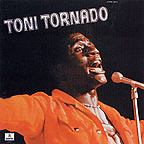 Toni Tornado "B. R. 3" (Odeon, 1971) (LP)
Apparently this fellow was a television actor who briefly made the move into a music career, as a pioneer of the Black Rio soul scene. His debut on the Odeon label is nearly indistinguishable from similar hard-edged funk by Tim Maia, an uneasy, back-and-forth mix between the machine-gun vocal style of James Brown and the softer crooning of the Philly crowd. Still, it's way way better than wimpy material by Cassiano and his ilk. A slew of well-known jazz and soul musicians worked with Tornado on this album (each apparently recording with him on separate sessions), including Paulo Moura, Dom Salvador and Waltel Branco. Worth checking out if you're tracking down these old soul albums.
 Toni Tornado "Toni Tornado" (Odeon, 1972) (LP)
Tornado's follow-up album is fairly dreadful, though, full of spasmodic, hyperactive arrangements which at their best sound like the disco-y work of Banda Black Rio, and at their worst are simply loud and unfocussed. Retro-funk fans will probably dig this album, but it lacks polish and doesn't really hold up.
 Tony & Frankye "Tony & Frankye" (CBS, 1971) (LP)
A pretty groovy soul-funk album, featuring the short-lived duo of Tony Bizarro and Fortunato Arduini, who lay down as solid a set of '70s soul as any Brazilian act of the era. The first track kicks off with a direct lift of Sly Stone's "Thank You" (and I mean that as a compliment!) while other songs harken back to '60s artists such as Arthur Conley or Sam & Dave. A dash of psychedelic rock guitar comes in, with a Guess Who-ish hard rock feel. Unfortunately, the second half of the album succumbs to the tortured warbling vocal style favored by "Black Rio" artists such as Tim Maia and Cassiano -- I dunno why Brazilian soul singers liked that style, but they did: it doesn't age well. Overall, though, this is pretty cool, especially by Brazilian standards. Definitely an album worth tracking down! (Note: Obviously Bizarro went on to record solo stuff after this, but I'm not sure what became of Arduini - anyone have any info on him?)
Trio Mocoto - see artist discography
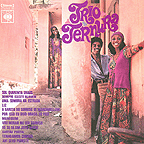 Trio Ternura "Trio Ternura" (CBS Records, 1971-?) (LP)
(Produced by Raul Seixas)
A cool psychedelic soul-pop album, produced under the auspices of crazed, ne'er-do-well avant-rocker, Raul Seixas, who was just about ready to get kicked off the CBS label himself for green-lighting his own solo album without the label head's approval. Enough about him, though... This album has some great '60s pop twists, LA-style orchestral stuff, cannily blended with driving funk, similar to early Sly & The Family Stone. They later released an album under the name of Quinteto Ternura (see above). Retro fans pay heed: this is an album worth tracking down!
 Uniao Black "Uniao Black" (RCA Victor, 1977) (LP)
(Produced by Roberto Livi & Pedro Da Luz)
One of the handful of Braz-Soul bands that really deliver the goods. Plenty of great, bouncy, heavy bass lines, straight out of KC & The Sunshine Band, or the O'Jays, but with a seriously funky undercurrent. Unlike many of their disco-ed out contemporaries, these guys really "got" it... The album does lapse into funky-jam tedium after a powerful start, but the level of playing is still far above most of the Black Rio bands, sexier and less jarring or hyperactive than, say, Banda Black Rio. Recommended.
Uniao Black "Banda Uniao Black" (Commonfolk Records, 2005)
 Veiga & Salazar "Original" (ST2/Trama Records, 2000)
Poppy, bouncy hip-hop from Sao Paulo, featuring sharp turntabulism, decent beats and live, funky saxophone. These guys have flow, although I admit I found my attention wandering midway through the album... Andres Salazar's sax work is a little weak in places; not bad, just not as soulful as it might have been, although his Spanish-language rapping easily matches Gustavo Veiga's Portuguese tongue-twisting toasting talents. Keep in mind, these kids are pretty young, and this is a pretty strong debut. Worth checking out if you're into the whole global hip-hop trip.
Veiga & Salazar "Os Bridoes De Ouro" (Atracao Records, 2003)
Veiga & Salazar "Ontem Ja Era" (ST2/Trama Records, 2004)
Veiga & Salazar "Original" (2007)
 Noriel Vilela "Eis O Ome" (Copacabana Records, 1968) (LP)
(Produced by Ismael Correia; Arrangements by Maestro Carioca)
A strong, sweet, swinging set by deep-toned, deeply funky singer Noriel Vilela, who originally came from Nilo Amaro's band, Cantores De Ebanos, and is considered one of the core artists of the "samba rock" sound... Apparently this was his only full album before his premature death -- a pity, since he was really fun artist. If you like Wilson Simonal's perky early albums, then this one is a must-hear as well. Great, groovy arrangements -- this one really swings! The original album didn't include his best-known song, "16 Toneladas," the super-funky sambadelic remake of Tennessee Ernie Ford's "Sixteen Tons" and neither did the 2002 or 2012 CD reissue: would have made a great bonus track. Oh well, maybe next time...
 Zeca Do Trombone & Roberto Sax "Zeca Do Trombone & Roberto Sax" (Pirata Records, 1976) (LP)
A very sleek and sexy funk-jazz set from two of the best-known session players on the Brazilian '70s soul scene. Zeca do Trombone takes the lead vocals (frequently backed by a female chorus) and though he doesn't have a strong voice, he sounds pretty cool, make the most of his gravelly, old-man tone. The arrangements are brisk and light, but cheerful and compelling, too. If you're a fan of Tim Maia, Banda Black Rio or other artists of similar vintage, you'll want to check this album out: for my money, it's one of the best records in the genre.
 Zeca Do Trombone "Roto Mar" (Timbre, 1980) (LP)
Honestly, he sounds a little long in the tooth here... The bland funk/soul arrangements sound kinda slack, and his vocals sound positively geriatric. Not sure what was going on, but it's certainly a big change in energy level and immediacy from his previous efforts just a few years earlier. Oh, well.
 Zeca Do Trombone "Um Trombone Em Simonal" (Atracao Records, 2012)
Claudio Zoli - see artist discography
 Zuco 103 "Outro Lado" (Ziriguiboom/Six Degrees Records, 2000)
Zuco 103 "The Other Side EP" (Ziriguiboom/Six Degrees Records, 2000)
A canny mix of Brazilian MPB, soul, and European trip-hop/dance styles. This Dutch ensemble features the sleek vocals of Brazilian expatriate, Lilian Veira... It took me a while to place the feel of her style, but finally it dawned on me: if Sade had spoken Portuguese, the result might have been much like this. This is a sugary, languid album, which should blow the minds of the soul-ier club kids, though those of a more traditional, less electronic bent may find their attention wandering after a while. The Other Side EP gets even clubbier and more house-y.
 Zuco 103 "Tales Of High Fever" (Ziriguiboom/Six Degrees Records, 2002)
I liked Zuco's first album, but they lost me a little on this one. It's too disco-y, too retro for me to enjoy, and -- sadly -- Lilian Veira's vocals seem a bit too shrill. I think she's trying for a Chaka Khan soulfulness, but she's really just got a Gal Costa voice. Nonetheless, that's just my personal take on this album. I'm sure that anyone into clubbier, loungier, kitschier, hipper, more electronic lifestyle will find this album irresistible. It's a densely-layered, intricate pop mosaic, with a wider stylistic range than my description might imply. On the later tracks there are some cool numbers based on Afro-Brazilian percussion; there's also a noteworthy cover of Jorge Ben's "Bebete Vambora..." But in the long run, this just ain't my cup of tea.
Zuco 103 "One Down, One Up" (Crammed Disc/Six Degrees Records, 2003)
Zuco 103 "One Down" (EP) (Crammed Disc/Six Degrees Records, 2003)
Zuco 103 "One Up" (EP) (Crammed Disc/Six Degrees Records, 2003)
 Zuco 103 "Whaa!" (Crammed Disc/Six Degrees Records, 2005)
Their best album so far, by far. A great, giddy modern Euro-Brazilian world-pop album, marking a quantum leap up from the band's first two albums from a few years back. On the opening track, "Na Magueira," singer Lilian Vieira bursts forth with an incandescent homage to the sprightly jazzy rhythm style of Elza Soares -- Vieira's version being draped in a contemporary techno-tinged sound mix... The band's roots in Europhilic dance music come back to the fore in a few of the house-ier tracks, but their explorations of African pop (on "Duele Le Le") and cameos by dub reggae legend Lee "Scratch" Perry make this album their richest, most resonant album to date. Nice stuff; as catchy as it is clever, and as propulsive as it is playful. Recommended.
 Zuco 103 "After The Carnaval" (Six Degrees Records, 2008)
(Produced by Zuco 103)
Brazilian electro-pop from the Zuco crew, who have always been a bit on the clubby side, but had a strong grounding in contemporary Afro-Brazilian styles as well. They get super-technoed out on a few tracks, particularly the aggressively house-y, Euro-flavored "Beija A Mim," one of the first songs on the album, but then delve deeper into samba and soft-soul as the album goes on. Lead vocalist Lilian Vieira has a reedy, Sade-ish feel which hardens when she turns to more samba-flavored material; each of these styles will find their fans, as this is an album that offers a variety of tempos and tones. If you enjoyed their earlier albums, you'll want to check this out as well... Overall, it'll probably have the greatest appeal for the club-kids contingent, but Braziliophiles will dig it, too.
 Various Artists "BLACK RIO -- BRAZIL SOUL POWER: 1971-1980" (Strut Records, 2002)
Certainly one of the strongest sets of Brazilian funk and soul that has been compiled to date. Like other similar sets, this disc has a strong disco tinge, but it is mercifully short on the strained soul ballads by thin-voiced crooners such as Cassiano and Hyldon, opting instead for more rugged material by the likes of Uniao Black, Copa 7 and Dom Salvador. Also included are big name artists like Banda Black Rio, Jorge Ben and Ben's one-time backup, Trio Mocoto, but also a slew of lesser known gems by Manito, Miguel de Deus, Eklipse Soul and others. This album's biggest coup is the inclusion of Antonio Carlos & Jocafi's surprise sizzler, "Kabaluere," a bass-heavy funk bomb with a strong Isley Brothers feel, recorded in 1971, by this otherwise fairly wimpy songwriting duo. Also has one track by Gerson King Combo, whose music remains mysteriously un-mined by the retro crowd. This is a very strong collection; hopefully Strut can come up with a follow-up volume or two of equal calibre. Recommended!
 Various Artists "THE BRAZILIAN FUNK EXPERIENCE" (Nascente, 2006)
Well, I guess one person's booty-shaking funk explosion is another person's fusion/soft-pop/soul serenade... Especially when one of them is a British club DJ, and the other is a yobbish Yank living near Oakland. Anyway, I'm not trying to say that DJ Patrick Forge doesn't know his stuff -- clearly he does, and this disc is a nice bit of crate-digging, picking out some interesting and occasionally atypical oldies from folks like Alaide Costa, Joao Donato, Joyce, Elza Soares and Marcos Valle -- it's just that most of these tracks are hardly what I would consider (or advertise) as "funk." To me, funk is more like George Clinton and Bootsy Collins, James Brown and The Bar-Kays, and less like Lionel Richie or Manhattan Transfer. (Okay, that's not an entirely fair contrast, but it's close...) Anyway, this set of tracks drawn from the Odeon vaults, with material dating from 1968-1980, and includes several rarities as well as some nice surprises (Djavan's 1978 recording of "Nereci," with duet vocals by Mariazinha, is an album highlight. I'm skeptical of the "funk" label -- I think it's pretty misleading -- but folks who like downtempo soul'n'samba will probably enjoy this quite a bit. Certainly worth checking out!
 Various Artists "CITY OF GOD" (Soundtrack) (Milan Records, 2003)
The soundtrack to Fernando Meirelles' hard-hitting, gritty feature film about life in the favela slums. An excellent collection of vintage "Black Rio" Brazilian soul, including tracks by Tim Maia, crooner Hyldon and Wilson Simonal's hipsterdelic "Nao Vem Que Nao Tem," which was previously anthologized on the SAMBA SOUL '70 album reviewed below. Also included are sweet samba tunes from Cartola," an elder of the Mangueira samba school, and the anthemic "Metamorfose Ambulante," by rocker Raul Seixas. It's a fine set of classic songs to start with, but the new material that augments and connects these tracks is also pretty cool, '70s-styled funksploitation instrumentals by Antonio Pinto and Ed Cortez, along with a new samba-soul song by Seu Jorge, one of the best new artists in the style. This is a really groovy collection, definitely worth checking out!
 Various Artists "FAVELA CHIC: POSTNOVE 1" (BMG-France, 2002)
 Various Artists "FAVELA CHIC: POSTNOVE 2" (BMG-France, 2002)
This series was assembled by the DJs at a hip Parisian nightclub , where it's said to be all the rage. This volume opens with several well-selected '70s rock and soul numbers, by the likes of Trio Ternura, Rita Lee and Toni Tornado; it moves into more modern remix tracks from labels such as Trama and Natasha, and then alternates back and forth between classic tropicalia and contemporary novo-tronica. It's not bad!
 Various Artists "FAVELA CHIC: POSTNOVE 3" (BMG-France, 2002)
 Various Artists "HOJE E NATAL" (Mercury Records-Japan, 1999)
To balance things out, you might want to track down this spiffy but expensive Japanese import of classic '70s soul from Gershon King Combo, Cassiano, Jorge Ben, and Caetano Veloso... Since this was compiled By Arto Lindsay, I presume it's all first-rate stuff, but since I still haven't won the Lottery, I haven't had the good fortune to find out yet...
 Various Artists "SAMBA SOUL '70" (Six Degrees/Ziriguiboom Records, 2001)
A pretty sweet set, and probably the best collection of Brazilian soul we're likely to see up in the States for some time to come. Apparently these guys didn't have access to the full Philips-PolyGram catalog, so there are major omissions - Tim Maia, Gershon King Combo and Jorge Ben, to name a few - but what's here is pretty tasty. The disc's major coup is the inclusion of Wilson Simonal's super-swinging "Nao Vem Que Nao Tem," a hip, Ray Charles-style zinger from the mid-'60s which mysteriously has never been included on any of Simonal's own best-ofs... There are also plenty of other rarities and odd inclusions (such as a funky disco-era track by former jovem guarda teen queen, Wanderlea...) along with staples of the samba-soul scene like Banda Black Rio, Dom Salvador and Trio Mocoto. The slant of this collection is somewhat lounge-y and acid-jazz-ish -- not as all-out disco or as sappy and Philly-Sound as it might have been. Overall it's pretty breezy and fun. It also has several impossible-to-find songs on it... Worth checking out!
 Various Artists "SOUL BRASILEIRO" (Universal, 2000)
I also haven't heard this collection yet, but there's a nice description of it on the Clique Music website. Although this only has 14 tracks (stingy!), it tracks Brazilian soul from the '70s through the '90s, including artists in the Polygram orbit such as Gershon King Combo, Ed Motta, Cassiano and Lulu Santos. Why Universal seems hellbent on holding back the material from Jorge Ben's Africa Brasil album is beyond me, but at least this is a step in the right direction.
More Brazilian music - Letter "A"


Other Brazilian Styles
Main Brazil Index
